Global Website Redesign
End-to-end redesign of a complex global investment platform — from research and information architecture to UI and delivery. +300% engagement · +15 usability points · −86% carbon footprint
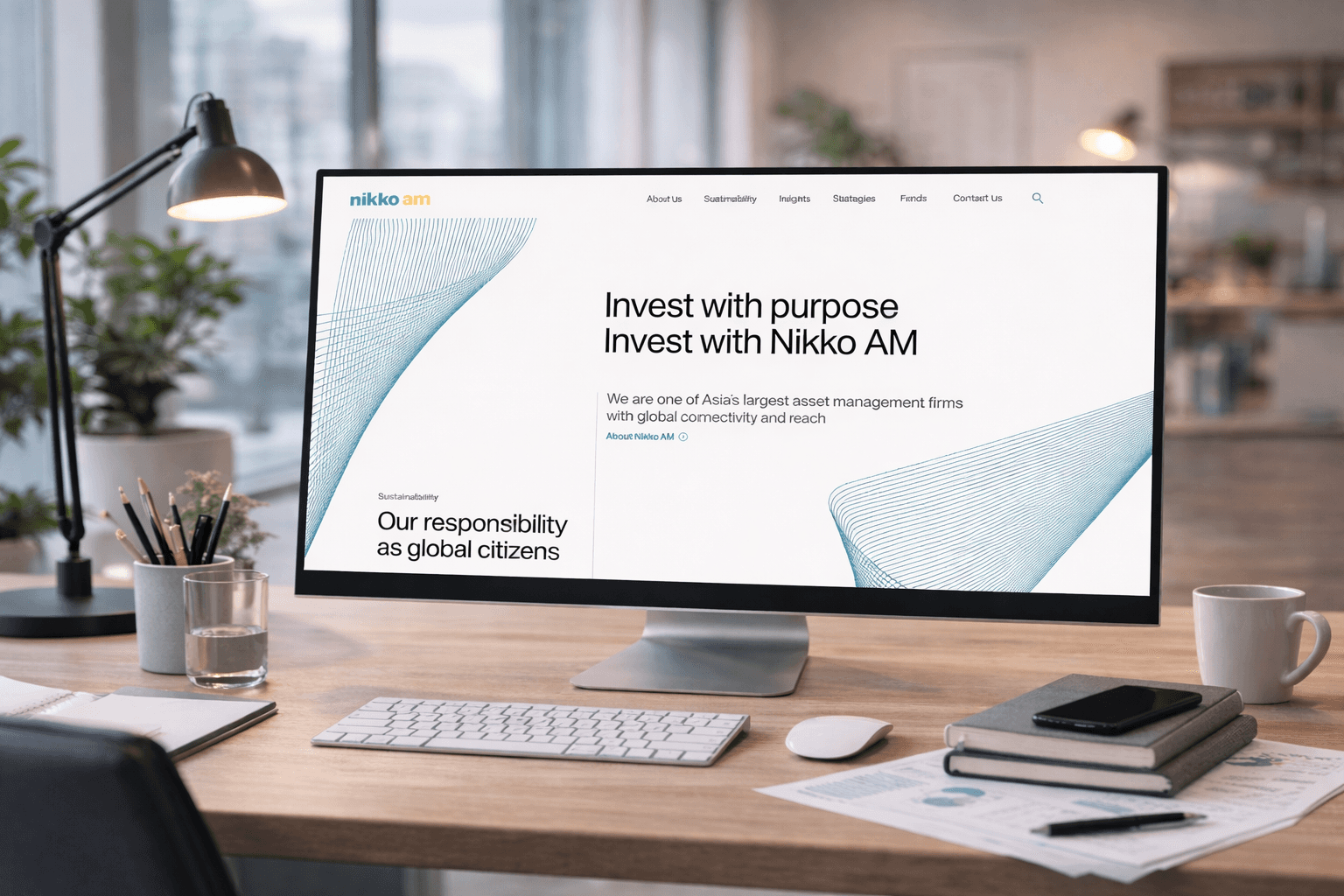
Project overview
Client
Nikko Asset Management — a global investment management company
Project scope
Redesign of a 10-year-old legacy website used by multiple internal teams and a broad external audience
Goal
Improve usability and accessibility, significantly reduce the website’s carbon footprint, and create a more maintainable, scalable system for content publishing and future growth.
My role & collaboration
Role
Lead UX / Product Designer
Responsibilities
Led UX strategy and end-to-end design process
Defined information architecture and key user flows
Designed wireframes and high-fidelity UI
Built and documented reusable components
Collaborated closely with developers to ensure feasibility and performance
Team
Developers
Graphic Designer
Marketing & Sales stakeholders
Process
Key challenges
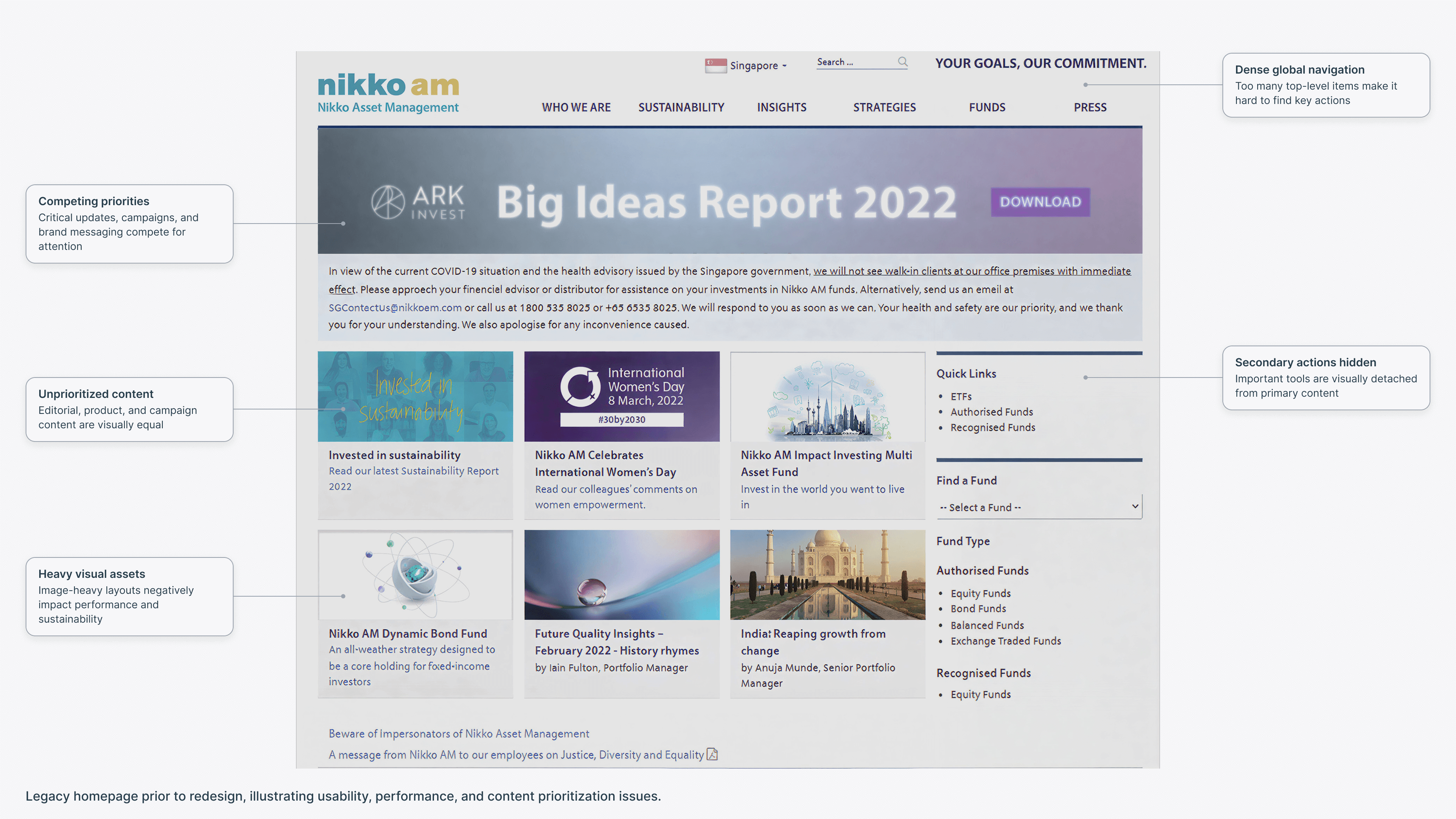
Poor usability and navigation
Users reported the site as difficult to navigate, with unclear hierarchy and limited guidance toward key actions.
High environmental and performance cost
The website generated approximately 2 tons of CO₂ per year, largely due to heavy visual assets and inefficient code.
Weak search and mobile performance
Low average search rankings and poor mobile performance limited discoverability and accessibility.
Operational inefficiency
Content updates across regions were time-consuming and required technical support, slowing down publishing workflows.
Low engagement with critical content
High bounce rates and limited interaction with key sections, including sustainability reports, reduced overall impact.
Design approach & solutions
Reworked information architecture
Simplified navigation and clarified content hierarchy by reducing top-level categories and grouping content by user intent. This made key sections such as Invest with Us and Contact Us easier to find and act on, while supporting different user groups across regions.
Lightweight visual design system
Introduced a modern, brand-aligned look and feel optimized for performance and accessibility, reducing visual and technical overhead.
Performance- and sustainability-driven design
Reduced asset weight and visual complexity to significantly lower CO₂ emissions while improving load times and mobile performance.
CMS modernization and automation
Migrated to a modern CMS, introduced automation for cross-regional updates, and replaced static PDFs with HTML pages to improve scalability and maintainability.
SEO-focused content improvements
Optimized metadata, refined top-level copy, and improved keyword usage to increase search visibility.
Dynamic and modular content
Implemented dynamic content blocks to surface relevant insights and encourage deeper engagement.
Results
Outcomes & impact
Usability & engagement
Usability score improved by +15 points (63.8 → 78.8 / 100)
70% of users reported the new site as easy to use and navigate
3× increase in total engagement
47% engaged sessions, up from previous levels
Performance & sustainability
86% reduction in CO₂ emissions, reducing annual footprint from 2 tons to 0.28 tons
Mobile performance score improved by +22 points
Search ranking improved by 4 positions
Organic traffic increased by 2%
Content & internal efficiency
Publishing a new article became 6× faster
Non-technical users can now create pages in 15–60 minutes
Key Learnings
Designing for flexibility
An agile, iterative approach allowed the team to respond to evolving requirements without compromising usability or performance.
User-centered decision-making
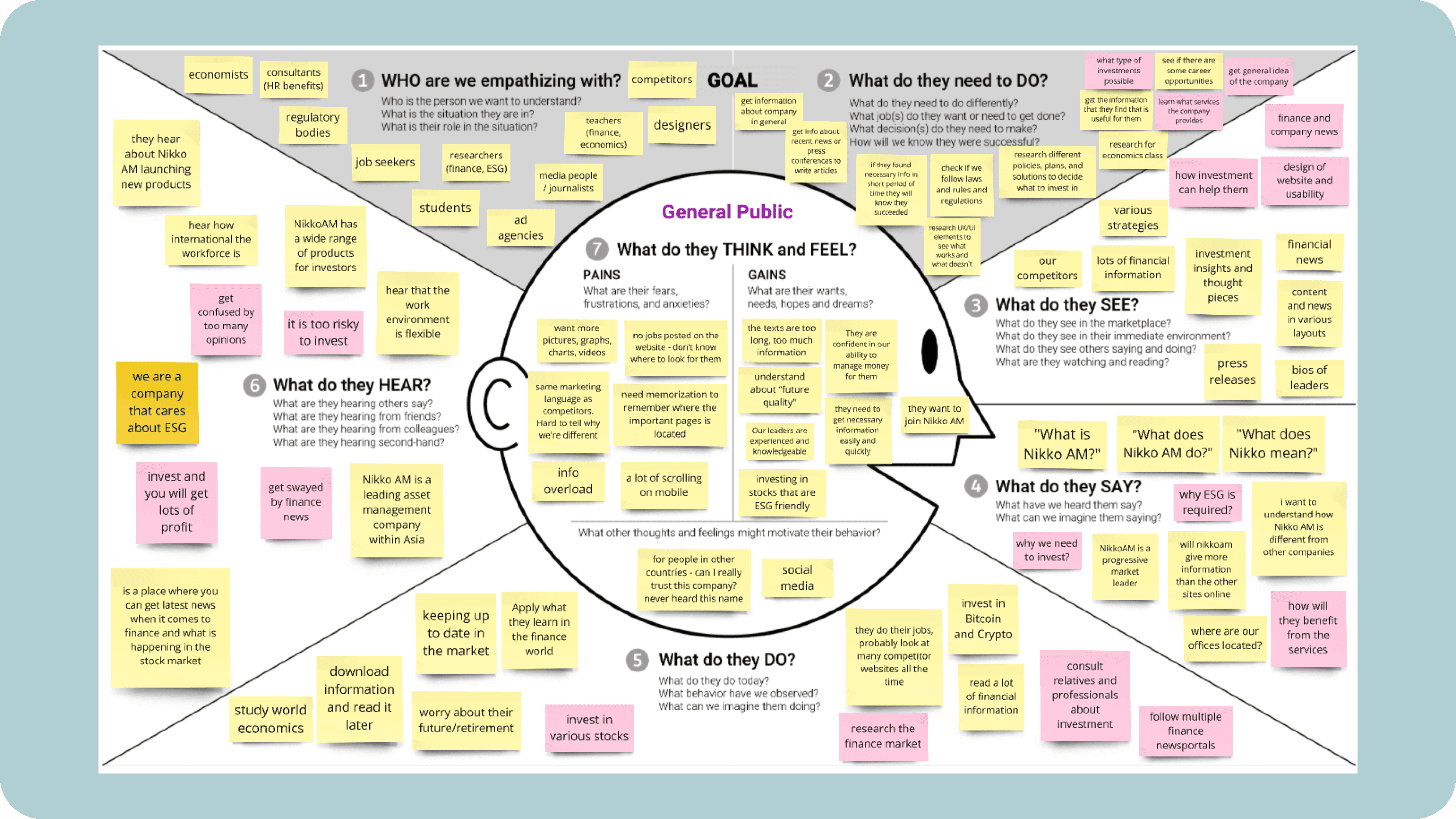
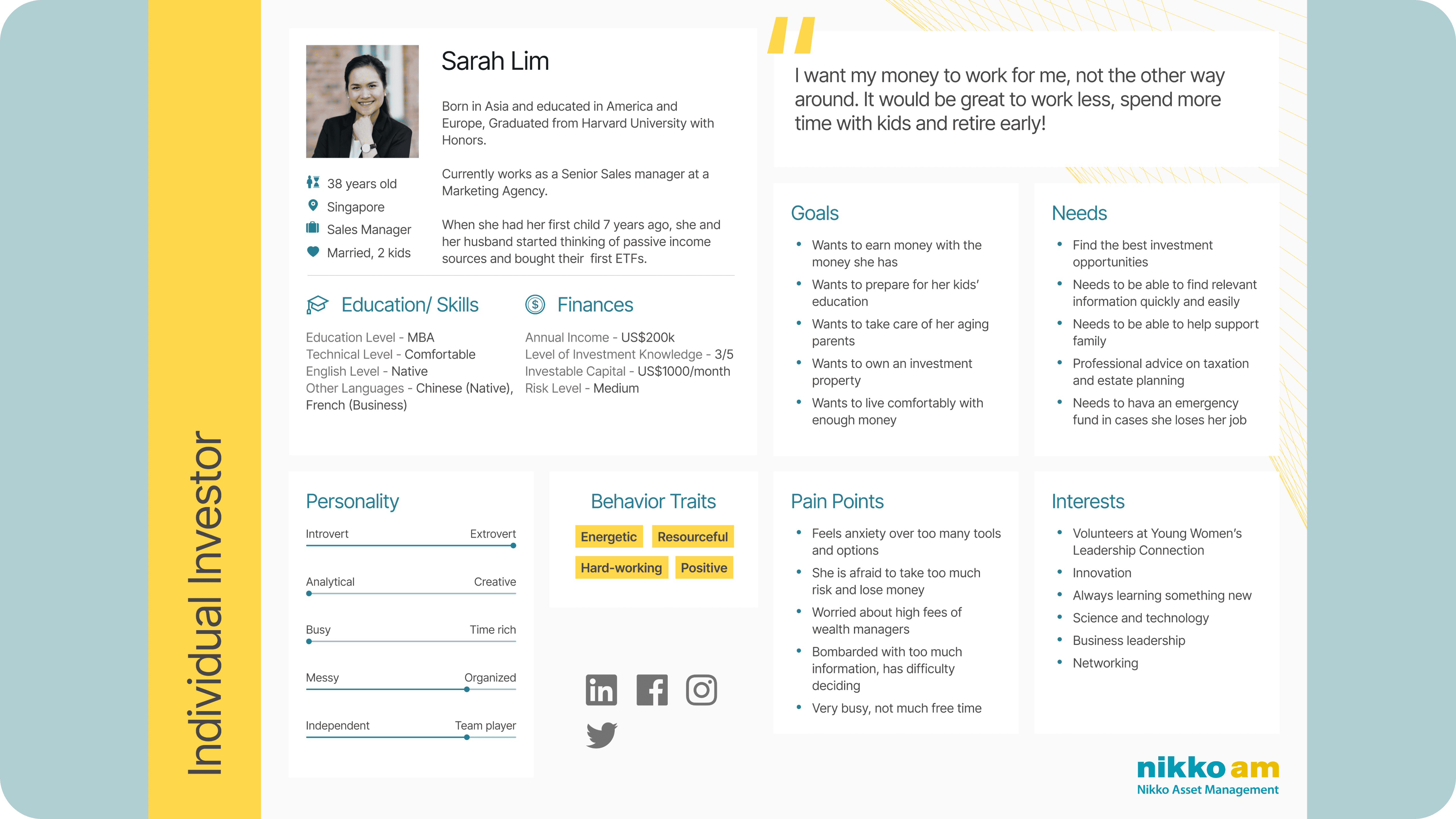
Regular surveys, usability testing, and stakeholder feedback ensured solutions addressed real user needs rather than assumptions.
Data-informed design
Analytics and heatmaps were used to validate layout decisions, content hierarchy, and interaction patterns.